
About the Department
The Department of Sciences and Humanities, established in 2008, serves as a strong academic foundation for the five branches of Engineering, Artificial Intelligence and Data Science (AI&DS), Electronics and Communication Engineering (ECE), Computer Science and Engineering (CSE), Electrical and Electronics Engineering (EEE), and Information Technology (IT). The department provides an encouraging and learner-centered atmosphere that promotes academic competence, critical thinking, creativity, and problem-solving skills among students. It is committed to meeting the academic needs of various engineering disciplines through effective teaching and learning practices, while imparting strong fundamentals in basic sciences, mathematics, communication and humanities to support the overall academic development and upliftment of engineering students.
Vision
- To empower the students with cutting-edge knowledge in Basic Sciences-Physics and Chemistry, Mathematics and Humanities, enabling them to be well knowledge with integrate interdisciplinary concepts with emerging Engineering and Technology applications.
Mission
- To promote interdisciplinary areas and its application in emerging trends of Basic Sciences, Mathematics, Environmental Science and sustainable technologies. Also
To develop graduates with scientifically competent, innovative, and industry-ready with strong analytical, technical, communication, and problem-solving skills.
Programme Outcomes
PO1: Engineering Knowledge: Apply knowledge of mathematics, natural science, computing, engineering fundamentals and an engineering specialization respectively and to develop to the solution of complex engineering problems.
PO2: Problem Analysis: Identify, formulate, review research literature and analyze complex engineering problems reaching substantiated conclusions with consideration for sustainable development.
PO3: Design/Development of Solutions: Design creative solutions for complex engineering problems and design/develop systems/components/processes to meet identified needs with consideration for the public health and safety, whole-life cost, net zero carbon, culture, society and environment as required.
PO4: Conduct Investigations of Complex Problems: Conduct investigations of complex engineering problems using research-based knowledge including design of experiments, modeling, analysis & interpretation of data to provide valid conclusions.
PO5: Engineering Tool Usage: Create, select and apply appropriate techniques, resources and modern engineering & IT tools, including prediction and modeling recognizing their limitations to solve complex engineering problems.
PO6: The Engineer and The World: Analyze and evaluate societal and environmental aspects while solving complex engineering problems for its impact on sustainability with reference to economy, health, safety, legal framework, culture and environment.
PO7: Ethics: Apply ethical principles and commit to professional ethics, human values, diversity and inclusion; adhere to national & international laws.
PO8: Individual and Collaborative Team work: Function effectively as an individual, and as a member or leader in diverse/multi-disciplinary teams.
PO9: Communication: Communicate effectively and inclusively within the engineering community and society at large, such as being able to comprehend and write effective reports and design documentation, make effective presentations considering cultural, language, and learning differences
PO10: Project Management and Finance: Apply knowledge and understanding of engineering management principles and economic decision-making and apply these to one’s own work, as a member and leader in a team, and to manage projects and in multidisciplinary environments.
PO11: Life-Long Learning: Recognize the need for, and have the preparation and ability for i) independent and life-long learning ii) adaptability to new and emerging technologies and iii) critical thinking in the broadest context of technological change.
DEPARTMENT OF SCIENCE AND HUMANITIES | ||||
S.No | AU-FIN | AICTE ID | Name & Designation & Department | Photo |
1 | 2667681983 | 1-3573698783 | Dr. VIJAYAKUMAR NALLASAMY | 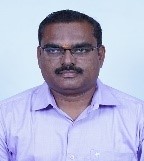 |
2 | 2652521981 | 1-695362449 | Dr. DHANASEKARAN ESWARAN | 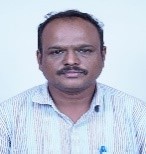 |
3 | 2685481975 | 1-7743896338 | Dr.BALASUBRAMANIAM P | 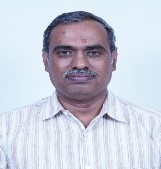 |
4 | 2643791988 | 1-7374889368 | Mrs. JANNATHULFIRTHOUSE S | 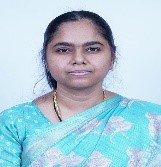 |
5 | 2618851960 | 1-454543033 | Dr. SHANMUGAM P | 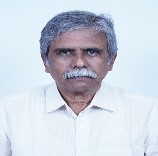 |
6 | 2632361979 | 1-44717732244 | Dr. VIJAYA CHANDRA R | 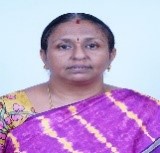 |
7 | 2619721982 | 1-44730440040 | Dr. PUSHPALATHA VELUSAMY | 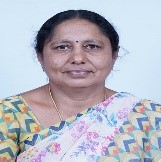 |
8 | 2620131982 | 1-7503524913 | Mrs. POONGODI RAJU | 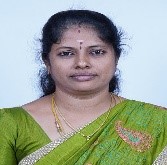 |
9 | 2660201978 | 1-43800323904 | Mr. MOHANKUMARAVELU A M | 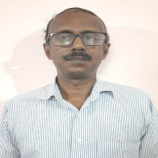 |
10 | 2681581990 | 1-2694246657 | Mr. ANANDHARAJ A | 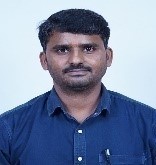 |
11 | 2786361994 | 1-47948636732 | Mrs. DHANALAKSHMI S | 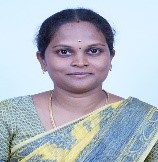 |
12 | 2634561976 | 1-822057214 | Dr. ANANTHI S | 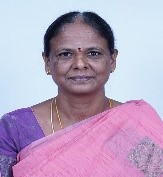 |
13 | 2650921981 | 1-456794525 | Dr. KIRUTHIGA ANBANANDAM | 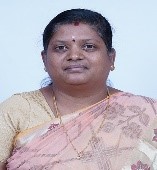 |
14 | 2611081985 | 1-9324773161 | Mrs. SATHIYA P | 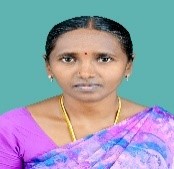 |
15 | 2681761998 | 1-47692198800 | Dr. SOWMIYA K C | 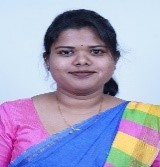 |
16 | 2684811980 | 1-768733843 | Dr. GOMATHY R |  |
17 | 2626451981 | 1-441603491 | Mrs. SATHYA S K |  |
18 | 2683601995 | 1-7397877618 | Ms. YAZHINI V |  |
19 | 2614121999 | 1-33025628708 | Ms. DHIVYA BHARATHI THANGARAJ |  |
20 | 2752161997 | 1-47733678252 | Dr. SOWBHARANIKAA D N | 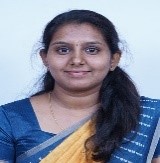 |
21 | 2784862003 | 1-47764736602 | Ms. RITHIKA V | 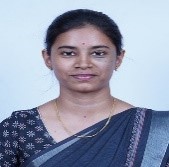 |
22 | 2636462001 | 1-44940094731 | Ms. CHANDRIKA M | 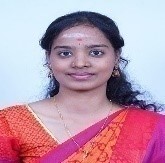 |
23 | 2627402002 | 1-44940094731 | Ms. PRIYANKA S | 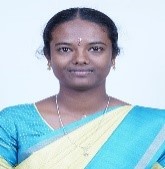 |
GENERAL ENGINEERING | ||||
S.No | AU-FIN | AICTE ID | Name & Designation & Department | Photo |
1 | 2659471991 | 1-9312662578 | Mr. PRABHAKAR K | 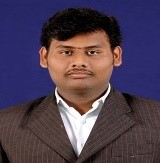 |
2 | 2633151986 | 1-9319854976 | Mr. ATTHIKUMARAN N | 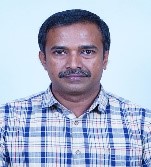 |
3 | 2620781990 | 1-2303781353 | Mr. RAGUNATH V | 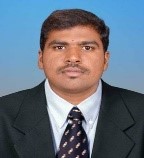 |
4 | 2619391989 | 1-2483293628 | Mr. KARTHIKEYAN P | 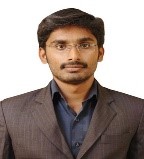 |
5 | 2667181994 | 1-47692198762 | Mrs. DEEPIKA D | 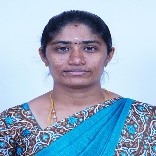 |
6 | 2718301991 | 1-47948409159 | Mrs. ANU REKHA K G |  |
7 | 2612791991 | 1-7375605351 | Mr. KARTHIK M P | 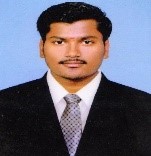 |
8 | 2668961985 | 1-11339803138 | Mr. SARAVANAPRABHU A. K. DURAI | 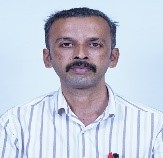 |
9 | 2688631988 | 1-2192031045 | Dr. GIRIMURUGAN R | 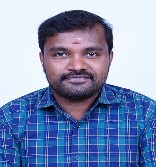 |
10 | 2683841990 | 1-2194905345 | Dr. MAHESKUMAR PONNUSWAMY | 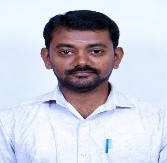 |
11 | 2681161989 | 1-2190355088 | Mr. VISWANATHAN N | 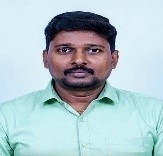 |
12 | 2675431987 | 1-2190576957 | Mr. ARUNKUMAR S | 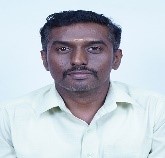 |
13 | 2697151992 | 1-3184082219 | Mr. ADITHYA KRISHNAKUMAR | 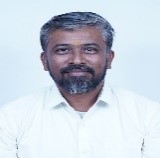 |
Curriculum & Syllabi
Laboratory Facilities
The Department of Science and Humanities is supported by well-equipped, modern, and adequately furnished laboratories that provide students with hands-on practical exposure and complement classroom learning. The department comprises the following major laboratories:
- Physics Laboratory – Equipped with modern experimental apparatus for optics, mechanics, electricity, magnetism, semiconductor physics, laser, fiber optics, ultrasonics, and measurement-based experiments. It enables students to understand and verify fundamental principles of physics through practical experimentation.
- Chemistry Laboratory – Fully equipped for practical work in Engineering Chemistry, including water analysis, pH and conductivity measurement, titration, electrochemistry, corrosion, material studies and chemical analysis. The laboratory provides appropriate instruments, glassware, chemicals, safety equipment, and storage facilities.
- English and Communication Skills Laboratory – A technology-enabled laboratory designed to develop students’ listening, speaking, reading, writing, pronunciation, vocabulary, presentation, group discussion, interview, and professional communication skills. It is supported by computers, headsets, multimedia facilities, and language-learning resources.
- Engineering Practice Laboratory – A well-furnished practical workshop providing fundamental exposure to engineering tools, materials, and manufacturing processes. It includes facilities for carpentry, fitting, welding, sheet-metal work, plumbing, basic electrical practices, and other introductory engineering activities.
Professional Society
The Department of Science and Humanities has the following professional societies that foster students’ academic excellence, scientific awareness, communication skills, leadership qualities, professional development, and exposure to emerging trends in science, technology, and industry.
- Indian Society for Technical Education (ISTE)
- Indian Science Congress Association (ISCA)
- Indian Society of Systems for Science & Engineering (ISSE)
Tab Content