
About the Department
The Department of Electrical and Electronics Engineering (EEE) was established in 2008 with an intake of 60 students and focuses on providing students with strong theoretical knowledge and practical skills in electrical engineering, electronics, power systems, control systems, electrical machines, renewable energy, power electronics, and emerging technologies. The department emphasizes outcome-based education through well-equipped laboratories, hands-on training, industry interaction, technical workshops, internships, and project-based learning. Students are encouraged to develop analytical, problem-solving, innovative, and professional skills to meet the evolving requirements of the electrical and energy sectors.
The department also promotes research, innovation, entrepreneurship, and interdisciplinary learning in areas such as renewable energy systems, electric vehicles, smart grids, energy storage, automation, artificial intelligence, and IoT-enabled electrical systems. Experienced faculty members guide students in academic projects, research publications, consultancy, and participation in technical competitions. Through strong industry–academia collaboration and continuous skill development, the department prepares graduates for successful careers in core electrical industries, power and energy sectors, automation, electric mobility, research, higher education, and entrepreneurship.
Programme Offered
S.No. | Name of the Course | Intake |
1 | B.E–Electrical and Electronics Engineering | 60 |
VISION OF THE DEPARTMENT
To be a centre of excellence in the field of Electrical and Electronics Engineering with Global standards of Academic and Research for the need of Society and Industry.
MISSION OF THE DEPARTMENT
- To provide value based Electrical Engineering education and produce innovative, competent and high quality Electrical and Electronics professionals for the growing demand of society and Industry.
- To facilitate the students for the constant upgradation of Technical expertise and perform research activities to solve the real world problems.
Program Educational Objectives (PEOs)
PEO1 :Achieve excellence in industrial careers or advanced studies in Electrical Engineering and related disciplines.
PEO2 :Uphold ethical standards in professional practice and actively contribute to the growth and responsibilities of the profession
PEO3 :Embrace emerging technologies and continuously update knowledge to remain relevant in the field.
Program Outcomes
- Engineering Knowledge: Apply math, science, and engineering fundamentals to complex problems.
- Problem Analysis: Identify and analyze complex problems using research and sustainability principles.
- Design Solutions: Design systems and processes considering health, safety, cost, culture, and environment.
- Investigations: Use experiments, modelling, and data analysis to reach valid conclusions.
- Engineering Tools: Apply modern tools for modelling and problem-solving, recognizing their limits.
- Society & Environment: Assess societal, legal, and environmental impacts of engineering solutions.
- Ethics: Commit to ethics, human values, diversity, and legal compliance.
- Teamwork: Work effectively as an individual and in multidisciplinary teams.
- Communication: Communicate clearly in reports, presentations, and documentation across diverse groups.
- Management & Finance: Apply management and economic principles in projects and teamwork.
- Lifelong Learning: Engage in continuous learning, adapt to new technologies, and think critically.
Programme Specific Outcomes
PSO1: Analyze, design, and develop electrical circuits and systems for various industrial and societal requirements.
PSO2:Utilize modern tools and techniques for solving complex problems in electrical and electronic systems and provide sustainable solutions
PSO3: Upskill with rapid advancements in the field of Electrical Engineering and exhibit research aptitude, work effectively as team and uphold ethical practices.
Course Outcomes
Curriculum & Syllabi
DEPARTMENT OF ELECTRICAL AND ELECTRONICS ENGINEERING | ||||
S.No. | AU-FIN | AICTE ID | Name & Designation | Photo |
1 | 2661561976 | 1-7374049478 | Dr. MOHANKUMAR G B | 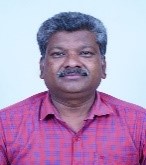 |
2 | 2654231975 | 1-9316120311 | Dr. KUMARESAN J | 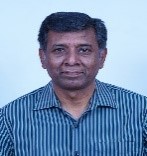 |
3 | 2614001983 | 1-821945704 | Mr. BALAMURUGAN P | 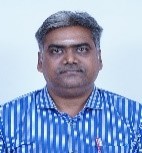 |
4 | 2647371986 | 1-821945708 | Mr. GOKUL KUMAR C |  |
5 | 2639771977 | 1-1505702158 | Mrs. HEMASILVIAVINOTHINI S |  |
6 | 2632721987 | 1-10639924881 | Mrs. HEMALATHA P |  |
7 | 2688751989 | 1-43382943263 | Mr. SARAVANAN S |  |
8 | 2668171984 | 1-454408025 | Mr. GOWRI SHANKAR V | 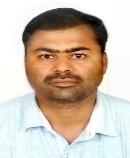 |
9 | 2651841987 | 1-7503237655 | Mr. PRASAD NATARAJAN |  |
10 | 2678901989 | 1-2912183491 | Mrs. CHARMILA D |  |
The Department of Electrical and Electronics Engineering is well-equipped with excellent laboratories that are used extensively throughout the year. The laboratory keeps a record of the equipment that has been used in the past. Each laboratory runs on a specific timetable, which is defined by the relevant Time Table coordinator for the particular semester/branch.
S. No. | Name of the Laboratory |
1 | Electrical Machines Laboratory – I |
2 | Electrical Machines Laboratory – II |
3 | Power Electronics Laboratory |
4 | Electric Circuits Laboratory |
5 | Electrical Engineering Practices Laboratory |
6 | Renewable Energy Systems Laboratory |
7 | Controls and Instrumentation Laboratory |
List of Active Professional Societies
Sl.No. | Name of the Professional Societies |
1 | The Institution of Engineers (India) |
2 | The Indian Society for Technical Education (ISTE) |
3 | Indian Science Congress Association (ISCA) |
MoU
Sl.No. | Name of the Company | Type of Company | MoU Signed on | MoU Valid Till | Purpose and Scope of MoU |
1 | Alfa Switchgear (I) Pvt Ltd., | Hardware | 05.03.2026 | 05.03.2031 | Industrial Training, Industrial Visit, Short Term Training Programs, Placement Guidance, Hardware and Software Product Development |
2 | Vi Microsystems | Hardware | 14.03.2025 | 14.03.2030 | Industrial Training, Industrial Visit, Short Term Training Programs, Placement Guidance, Hardware and Software Product Development |
3 | Aruthal Foundation | PMKK | 10.03.2025 | 10.03.2030 | Awareness Seminars, Testing and Related Services of the College and Industry, Research and Product Development, Seminars and Conferences |
4 | SAN Technovations | Hardware | 29.08.2023 | 29.08.2028 | Hardware and Software Training, Workshops, Faculty Development Program, Industrial Visits, |
5 | ETS Academy | Software | 19.03.2024 | 18.03.2029 | Final Year Project Guidance, Consultancy works, Placement Opportunities, Internship |
6 | Logical Support and Solutions& IPCS Global Solutions Pvt Ltd | Software | 29.08.2023 | 29.08.2028 | Industrial Training Through Value Added Courses, In Plant Training, Improve Skill Set of Students in Automation and Control, Embedded Solutions |
Faculty Publications
The faculty members of the Department of Electrical and Electronics Engineering (EEE) are actively engaged in research and academic activities, contributing significantly through publications in reputed national and international journals, conferences, and book chapters. The faculty members have also secured research grants and financial support from various funding agencies, including AICTE, CSIR, and other reputed organizations, for conducting research projects, seminars, workshops, and other academic initiatives. These accomplishments reflect the Department’s strong commitment to fostering research, innovation, knowledge creation, and continuous professional development in the field of Electrical and Electronics Engineering.
Sl.No. | Particulars | Count |
1 | SCI/SCIE/SSCI Indexed Publications | 17 |
2 | Conference Publications | 26 |
3 | Book/Book Chapter Publication | 2 |
4 | Patent | 11 |
5 | Research Grants / Sponsored Projects | 3 |
6 | Citation | 156 |
7 | Consultancy Work | 8 |
8 | H-Index | 13 |
https://www.youtube.com/@NCT-EEELECTUREVIDEOS